

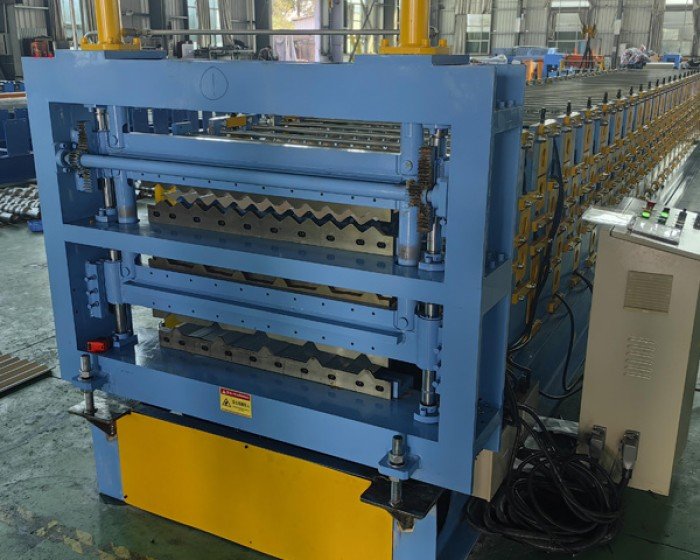
Precision engineering is one of the most important factors in modern manufacturing, enabling businesses to produce high-quality products with exceptional accuracy and consistency. As industries continue to demand tighter tolerances and reliable performance, manufacturers rely on advanced machinery and automated production systems to achieve superior results. Precision engineering improves efficiency, reduces waste, and enhances overall product quality, making it essential for today’s competitive manufacturing environment. By investing in a stud and track roll forming machine and a double layer roll forming machine, manufacturers can improve production accuracy and strengthen long-term operational performance.
Why Precision Engineering Matters
Manufacturing success depends on producing components that consistently meet exact specifications. Precision engineering minimizes dimensional variations, improves product consistency, and reduces production errors throughout the manufacturing process.
Modern production technologies combine advanced mechanical design, automated controls, and precision tooling to deliver dependable manufacturing results.
How Precision Engineering Improves Manufacturing
Higher Manufacturing Accuracy
Precision-engineered machinery produces steel components with exact dimensions and consistent profiles, ensuring products meet strict quality requirements.
Improved Production Efficiency
Accurate machine operation reduces production delays and minimizes the need for product rework, allowing manufacturers to maintain efficient production schedules.
Consistent Product Quality
Automated control systems maintain stable production conditions throughout the manufacturing process, ensuring every product meets the same high-quality standards.
Reduced Material Waste
Precise forming and cutting processes maximize raw material utilization, reducing scrap and improving overall manufacturing efficiency.
Greater Equipment Reliability
Well-engineered machinery delivers stable long-term performance with reduced maintenance requirements, helping manufacturers maintain continuous production.
Applications of Precision Engineering
Precision engineering supports the production of steel framing systems, roofing panels, wall panels, structural profiles, ceiling components, warehouse structures, industrial building materials, modular construction products, commercial building systems, and infrastructure materials. It plays a key role across many manufacturing industries.
Benefits of Precision Engineering
- Higher manufacturing accuracy
- Improved production efficiency
- Consistent product quality
- Reduced material waste
- Lower operating costs
- Reliable machine performance
- Long-term manufacturing stability
Choosing Precision Manufacturing Equipment
Manufacturers should consider machine accuracy, automation features, production capacity, durability, maintenance requirements, and technical support before investing in equipment. Reliable machinery improves manufacturing performance while supporting long-term business growth.
Advanced production systems also provide the flexibility to manufacture multiple product profiles efficiently without compromising quality.
Conclusion
Precision engineering is essential for modern manufacturing because it improves product accuracy, increases production efficiency, reduces waste, and ensures consistent quality. Businesses that invest in precision manufacturing technology are better prepared to meet industry standards and maintain a competitive advantage.
By investing in a stud and track roll forming machine and a double layer roll forming machine, manufacturers can strengthen production capabilities, improve operational efficiency, and deliver high-quality steel products that support sustainable business growth.